
Stop working twice as hard
Get tools to support your neurodivergent brain without telling your employer your diagnosis.
In 1 hour 40 minutes you'll have the strategy, the steps, and every template you need.
Make it concrete
Most people stall out on one question: what would I even ask for?
"Accommodation" sounds like it's for a physical disability. So let's make it concrete. Tap whatever is hardest about your workday.
That's an accommodation. And because accommodation is the legal word, your employer can be the one who pays for it.
Who's teaching this
I'm Jennifer Depner, and I've sat where HR is sitting.
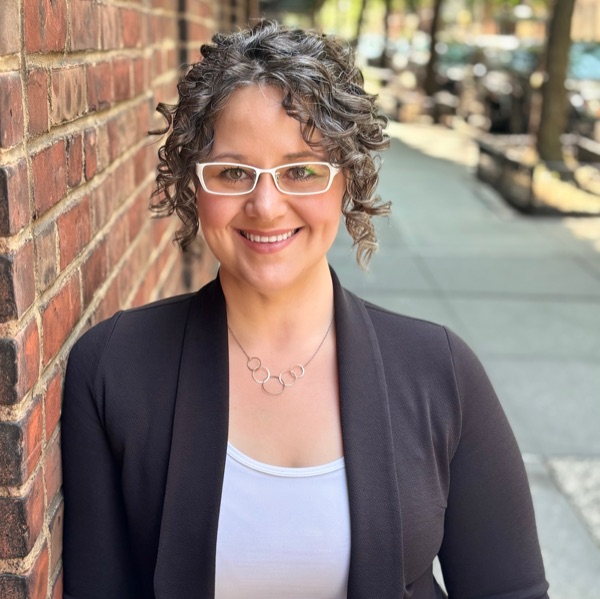
I've spent twenty years in HR and internal operations, including as the most senior HR person in the room at two organizations. I hold two advanced HR certifications: SHRM-SCP and CPTD.
I know what happens behind closed doors when an employee asks for accommodations. I know what HR is thinking, what they have to do, and what they're not likely to do.
Here's the part most people get wrong: most requests aren't denied because the company is being malicious. It's that nobody in the room understands the process. Including, a lot of the time, HR.
It's not an exaggeration to say my husband Edwin getting an Apple Watch changed our marriage.
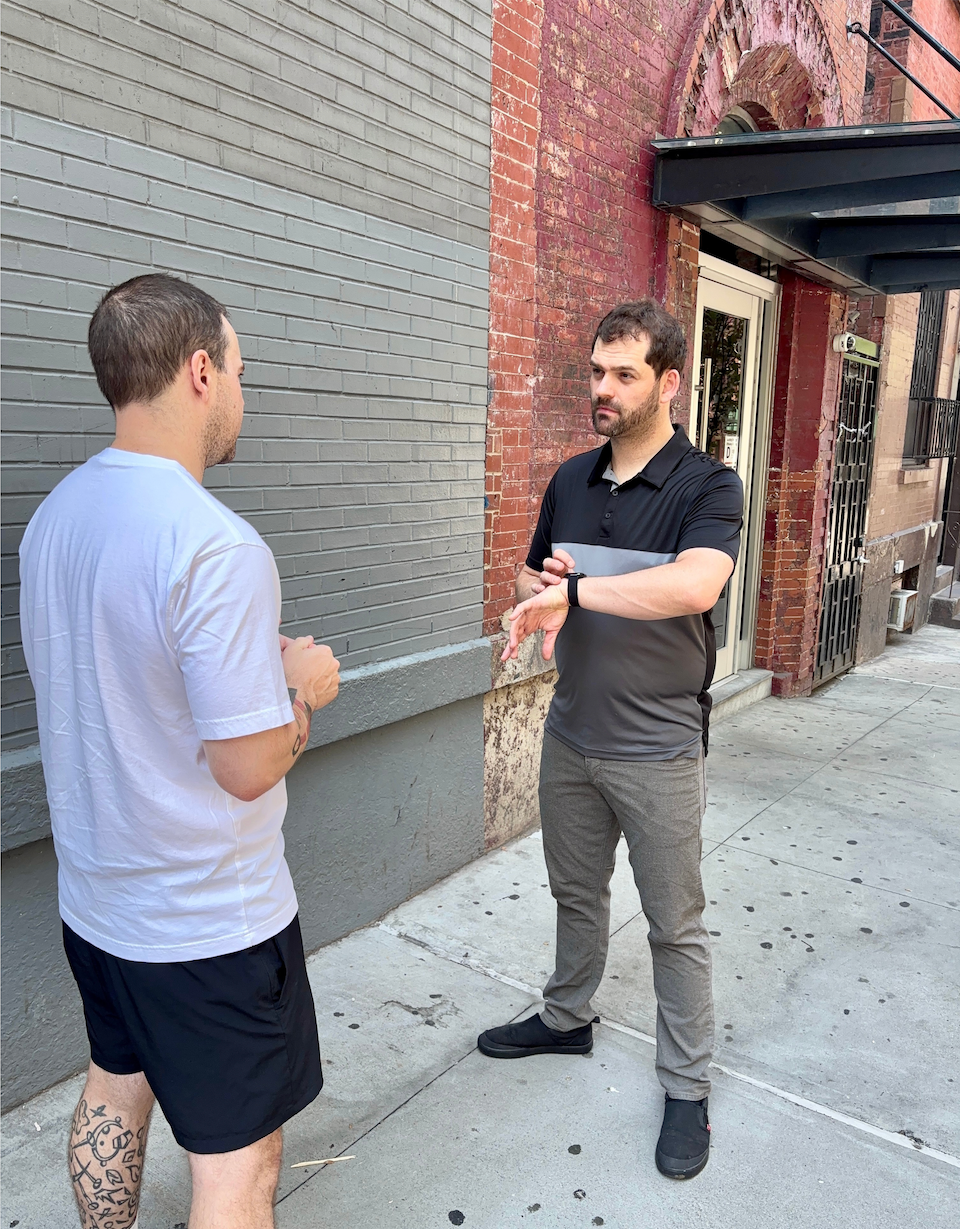
He has time blindness. If his phone was in his backpack on silent, it could take me hours to find him. I was hesitant about the watch, it felt like a fancy toy. Then he put it on and boom, everything changed. He always knew what was next, and he got a little tap on his wrist when I'd text no matter what room his phone was in.
That was the first time I understood how an accommodation could change someone's life. It wasn't even for me and it changed MY life.
When I left my executive job to help run Edwin's mental health practice, I kept hearing the same thing from his clients that I had watched him live with for twenty years. So I built Depner HR. Think of me as the HR professional on the side of your mental health.
The part nobody explains
The word that scares most people off: Disability.
You don't have to be deaf, blind, or in a wheelchair to qualify. The law includes people whose brains work differently.
For neurodivergence, a disability is where a limitation in thinking, concentrating or learning, causes work tasks to take substantially more effort for you than it does for the average person.
If you can do the job, how could it qualify as a disability, right? And this is exactly why so few neurodivergent folks use it. Sure, you may be keeping up, but you shouldn't have to need the whole evening on the couch to recover from masking all day.
If "disability" still feels too heavy for you, don't worry, you're not alone. A lot of people whose brains work differently never ask for the right tools at work because that word feels like it belongs to someone with something "more." More visible, more physical, more debilitating. That is simply not accurate.
Ask anyone who uses a wheelchair, a ramp doesn't make life easy. But it does mean you can get in the building. That's what I want to help you find: your ramp.
You don't have to love this word. You just have to know how to use it.
Real stories from real users
What people said after they went through it
"We are not taught how to write a letter for workplace accommodations in graduate school. I will ask all my patients to review your course before making workplace accommodations."
Tamie P., LCSW Mental Health Therapist"The templates gave me realistic language instead of vague suggestions. I feel like you are the adult I needed to give me permission to be blunt and direct, while guiding me on how not to sound like an a-hole doing it."
Danielle H."I had little to no knowledge of how to (or if I even could) ask for accommodations at work due to my ADHD. I feel better prepared to request an accommodation."
Paul C."Your calm, even tone made the content easy to listen to."
Betsy O'B.Everything included
Here is what you get when you enroll today
-
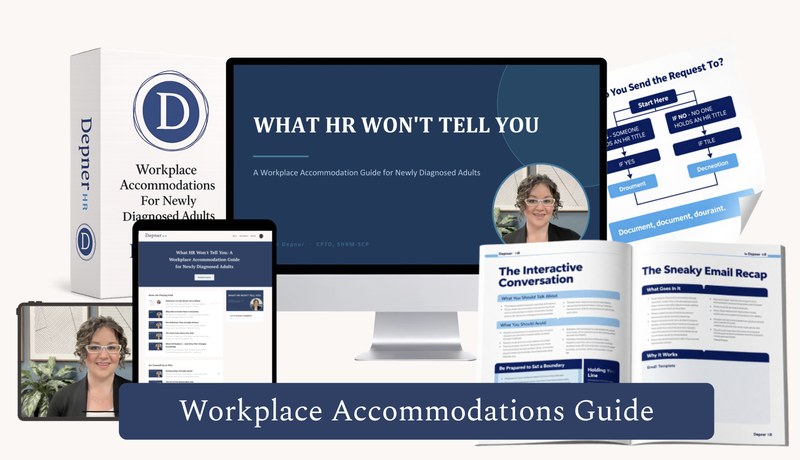
The full course, 12 video lessons
- Who the players are, and why they don't do what you think
- Setting yourself up to win before you ask
- Finding tools that work, and testing them for real
- The documents you need, and how to write them
- Who to ask, and when
-
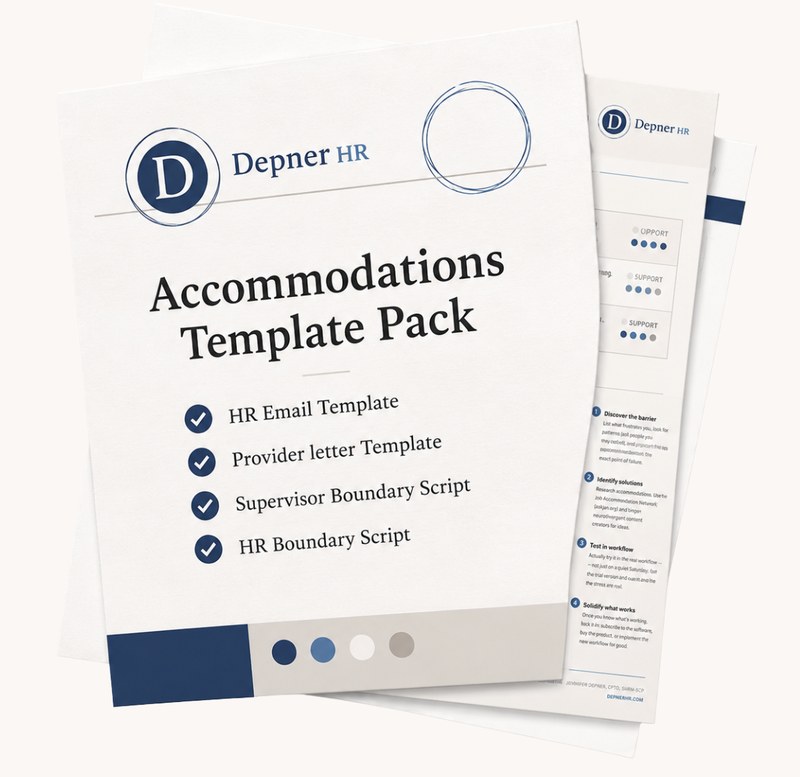
Accommodations Template Pack
- HR email template
- Provider letter template
- Supervisor boundary script
- HR boundary script
-
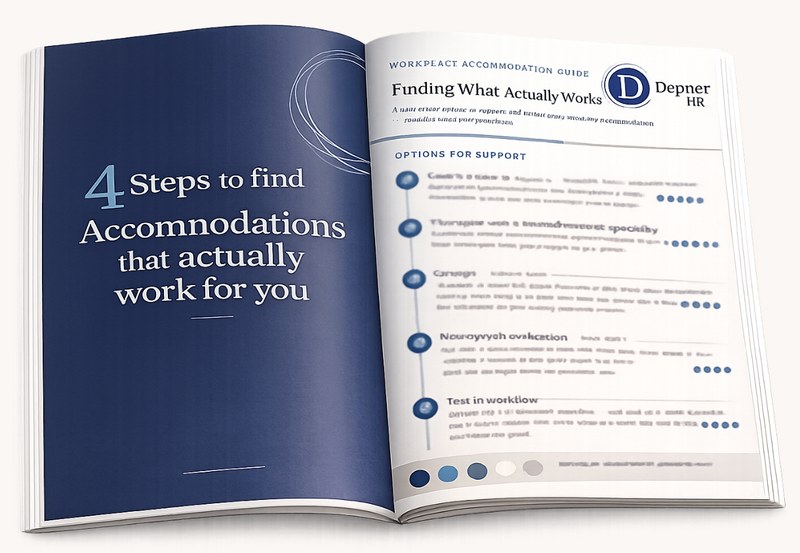
4 Steps to Find Accommodations That Actually Work for You
Half the battle is finding the thing that changes your work. This walks you through the search.
-
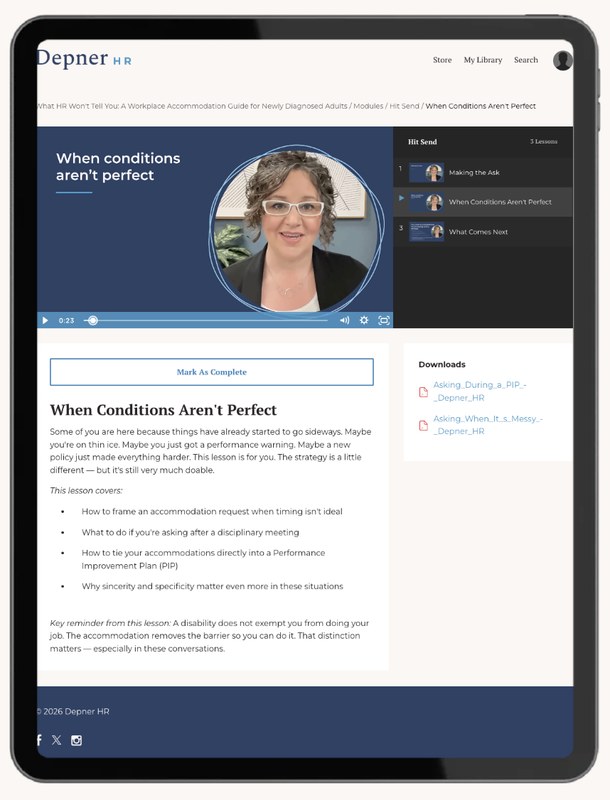
Help When It's Hard
For when things have already gone sideways.
- A disciplinary meeting
- A Performance Improvement Plan (PIP)
- Policy exemption requests
Neurodivergent coaching runs about $250 an hour. Two hours of it is $500, and it still wouldn't cover this much ground or send you home with the HR email, the provider letter, and the scripts for the questions you weren't ready for.
$500
$97
One payment, instant access, yours to rewatch forever.
Before you buy
Let me tell you who this is wrong for
I would rather you skip this than buy something that doesn't fit your situation.
This is for you if
- Work is genuinely harder for you than it is for your coworkers, and you're tired of making up the difference with effort
- You have a diagnosis, or you're starting to suspect one
- You've never gone through this process at work and gotten what you needed
- You want a yes, and you're willing to do the prep work that makes it easy for them to say it
This is not for you if
- You want to stick it to your employer. My whole purpose here is to reduce friction, and righteous doesn't get you there
- You're being discriminated against right now, or you want to file a lawsuit. That should be a conversation with a lawyer, never a course!
- You want the least amount of effort possible. My strategy creates the least friction for your employer, which is the quickest path to a yes. It still takes work from you
My promise to you
Go through the course and do the work. If you don't have a tool in place within 90 days, email me and I'll help you personally. If it still doesn't come together, I'll refund you in full.
Straight answers
The questions I get asked most
Can't I just use AI to get the template and skip this?
You could get a template to email HR from AI in thirty seconds. That was never the hard part. Using strategy so you don't get tripped up and being confident in what to say when someone asks a question you weren't expecting are the differences between a half-baked request being denied and an easy yes.
An AI template doesn't know who to choose if your company doesn't have HR, or what to say when someone keeps pushing for details they aren't entitled to. AI is trained to agree with your ideas, it's not going to reframe your ask so it reads as reasonable so you don't get laughed out of the room. This course gives you the strategy around the template, which is the part that actually gets you to a yes.
Do I have to tell my employer my diagnosis?
No. An employer cannot demand a diagnosis.
A proper provider letter states that your provider has determined the need, lists the functional limitation, and says what an appropriate accommodation would be. The diagnosis never gets mentioned.
The provider letter template in the course is built to do exactly that.
What if work is hard but I don't have a diagnosis?
You don't need a specific diagnosis to benefit from this. The diagnosis itself matters less than you might think. If work is genuinely harder for you than it is for your coworkers, this course will help you figure out why and what could help.
That said, if you haven't talked to a provider at all, starting to look for one is a good early step, and the course walks through how documentation fits in.
I'll be ready to email HR in 1 hour 40 minutes?
The course is built so you leave with the actual documents you need, not just ideas about them. The honest caveat: there are steps you will need to take before making the ask to ensure what your employer pays for actually removes the barrier.
The writing is done in 1 hour 40 minutes. Testing the tools is the part worth not rushing, but that part is entirely in your hands, so the quicker you start, the quicker you'll be ready!
Shouldn't I be getting this info from a lawyer?
Even though this process is protected by a law, it is not a legal process, it's an HR process. So let me use my 20 years of experience at every part of this process to guide you to the YES without any hassle.
If you're being discriminated against right now, or want to file a lawsuit, you will need an employment lawyer who is licensed to practice in your area. You can also reach the EEOC at 1-800-669-4000 or info@eeoc.gov.
If you want to get through the accommodations process with the least friction, that is exactly what this course was designed for.
Does this apply to my employer?
This course is built around US employment law and HR best practices. The Americans with Disabilities Act applies to employers with 15 or more employees, but in the US, the ADA is typically seen as the floor not the ceiling. Most states (and even some cities) have additional disabilities protections. Whether it's a giant employer or a tiny one, strategy almost always matters more than legal requirements since they are only protections if you plan to get others involved to enforce them.
All that being said, almost all modern democracies have ratified the UN Convention on the Rights of Persons with Disabilities, so the strategy carries broadly across a lot of countries but the paperwork, enforcement mechanisms, and legal frameworks will be different. This can definitely be applied in other countries, but will require a quick check against local laws so you replace the US-centric language.
Every day you wait is another day working harder than you have to
You've already spent enough time struggling. In one sitting, in the same time as a movie, you'll have a complete plan and the exact language to use with HR.
Backed by my 90-day personal promise.